
HIST 1710 The Jewish Atlantic: 1492-Present
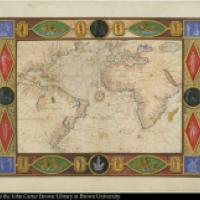
The Jewish Atlantic: 1492-Present (also JWST 1710, RELST 1710) (GHB) (HST-AS) (GLC-AS) Tuesday and Thursday: 1:25-2:40 Professor Mayer Juni The course will explore the rise and decline of the early modern Sephardi Diaspora in the early modern period, its settlement patterns and economic activities across Europe, the Middle East, Africa, and the Americas, and the unique ways that this group of historical actors elided contemporary religious, political, geographic, and racial schema. The second half of the course will explore the complex processes through which half the world’s Jews came to live in countries that lie on the Atlantic littoral over the course of the 19th and 20th centuries.
HIST 1802 Introduction to Latinos in U.S. History
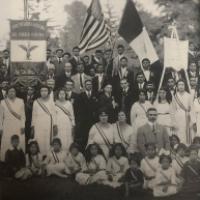
Introduction to Latinos in U.S. History (also AMST 1802, LSP 1802, LATA 1802, SHUM 1802) (HA-AS) (SCD-AS) (HNA) Tuesday and Thursday: 11:40-12:55 (3-credit course) Professor Maria Cristina Garcia This course seeks a fuller recounting of the U.S. history by remapping what we understand as “America”. We will examine traditional themes in the teaching of U.S. history – territorial expansion and empire, migration and nation building, industrialization and labor, war and revolution, and citizenship and transnationalism—but we will examine this “American experience” in a broader hemispheric context and include as actors Americanos of Spanish, Mexican, Caribbean, and Central/South American ancestries.
HIST 1930 A Global History of Love
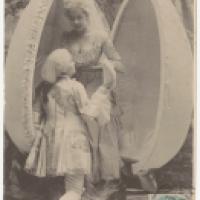
HIST 1930 A Global History of Love (also ASIAN 1193, FGSS 1940, LGBT 1940, SHUM 1930) (HST-AS)(SCD-AS) (HTR) Tuesday and Thursday: 11:40-12:55 plus discussion Professor Durba Ghosh By posing seemingly simple questions such as what is love and who has the right to love, this introductory-level lecture course surveys how love has been experienced and expressed from the pre-modern period to the present. Through case studies of familial and conjugal love in Africa, Asia, the US, Europe, and South and Latin America, the course will examine the debates about and enactments of what constitutes the appropriate way to show love and affection in different cultures and historical contexts. Among the themes we will explore are questions of sexuality, marriage, kinship, and gender rights. A final unit will examine these themes through modern technologies such as the Internet, scientific advances in medicine, and a growing awareness that who and how we love is anything but simple or universal. Photo Courtesy of Human Sexuality Collection, Rare and Manuscripts Collection, Kroch Library.
HIST 2006 Understanding Global Capitalism Through Service Learning
HIST 2006 Understanding Global Capitalism Through Service Learning (also AMST 2016, ASRC 2006) (HST-AS)(CU-CEL, CU-ITL) (HTR) Tuesday and Thursday: 9:40-10:55 plus trip to Jamaica (over spring break) Professor Edward Baptist This course is a seminar focused on a service-learning approach to understanding the history of neoliberal transformations of the global economy through the lens of an island (Jamaica) and a community (Petersfield.) Building on the success of recent year’s global service-learning course and trip to Petersfield, and now bringing the course under the auspices of both the Engaged Cornell and Cornell Abroad administrative and funding capabilities. Students will attend class each week and will also take a one-week service trip over spring break to work with the local community partner (AOC) in Petersfield. We will also work with Amizade, a non-profit based in Pittsburgh, who is the well-established partner of the AOC and which works with numerous universities on global service learning projects. They have a close relationship with CU Engaged Learning and Research.
HIST 2195 Biography, History, and Modernity
HIST 2195 Biography, History, and Modernity (also JWST 2195) (HB)(HST-AS)(ALC-AS) (HTR) Tuesday and Thursday: 1:25-2:40 plus Independent Research Professor Mayer Juni Drawing on a combination of primary and secondary sources, this seminar explores the multiple forms and evolution of biographical writing from the Renaissance onward. We will interrogate the relationship between biographical reasoning and several modern phenomena, including the construction of national identities, the rise of psychoanalysis, and even the historical profession itself. And we will consider whose voices, experiences, and subjectivities are historically valorized through the increasing prominence of biography, and who has been marginalized, silenced, or erased from history in the process.
HIST 2253 Diasporas from the Spanish Caribbean
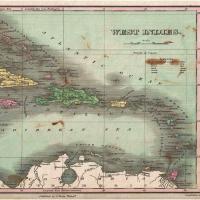
HIST 2253 Diasporas from the Spanish Caribbean (also AMST 2253, LATA 2253, LSP 2253) (HB) (HST-AS, SCD-AS) (HGS) Tuesday and Thursday: 2:55-4:10 plus Independent Research Professor Maria Cristina Garcia This seminar examines the Puerto Rican, Cuban, and Dominican diasporas in the United States. We will examine US relations with these three countries; the root causes of this Caribbean migration; their history in particular urban areas of the United States; and the political, social, and cultural issues that have attracted attention.
HIST 2435 Global Maoism: History and Present
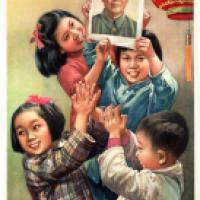
HIST 2435 Global Maoism: History and Present (also CAPS 2435, SHUM 2435) (GB) (ALC-AS, HST-AS) (HAN) Tuesday and Thursday: 2:55-4:10 plus Independent Research Professor Peidong Sun Maoism and Chinese Communism are not history after Mao's death in 1976. In China, Maoism holds the key to the enduring success of the Chinese Communist Party (CCP), one of the most remarkable organizations of the 20th and 21st centuries that has survived the collapse of communism in Europe and the USSR. With the beneficial transformation brought by capitalism and globalization in China, the end of the Cold War and the narrative of the "end of history" cannot explain the resurgence of Maoism.
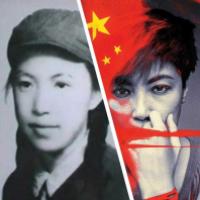
HIST 2575 Tyranny and Dignity: Chinese Women from the Cultural Revolution to the White Paper Revolution
HIST 1575 Tyranny and Dignity: Chinese Women from the Cultural Revolution to the White Paper Revolution (also CAPS 2575, FGSS 2575) (ALC-AS, HST-AS) (HAN) Tuesday and Thursday: 10:10-11:25 plus Independent Research Professor Peidong Sun This lecture course focus on the human condition of Chinese women after 1949. In the name of the Women’s liberation movement since the early 1900s, do Chinese women eventually hold up the half sky? From the cradle to the grave, what was most challenging in women’s life? How did political, economic, and cultural forces frame women’s professional careers and private life? No judgments nor imaginations. Using multi-media, such as Chinese independent documentary films, music, and photographs, students will discover the hidden stories behind the mainstream narratives. Workshops with film directors, pop music singers, and photographers offer students an unusual way of accessing all backstage field experiences.
HIST 2715 A Global South: Chile, the Pacific and the World
HIST 2715 A Global South: Chile, the Pacific and the World (also LATA 2715, SPAN 2715) (GB) (HA-AS, GLC-AS, HST-AS) (CU-CEL) (HGS) Tuesday and Thursday: 2:45-4:00 Professor Raymond Craib This course examines the history of Chile from the 1700s to the present, always with an appreciation for its place in a broader world but always also with attention to its regional and national specificities and its links to the Pacific. Lectures will be paired with readings from various genres: fiction, poetry, journalism, manifestos, speeches, historical monographs, and short stories.
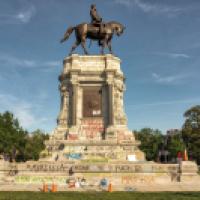
HIST 2792 Monuments, Museums, and Memory: An Introduction to Public History
HIST 2792 Monuments, Museums, and Memory: An Introduction to Public History (also AMST 2792, SHUM 2792)(ALC-AS, HST-AS) (HIST-HNA) Tuesday and Thursday: 1:25-2:40 plus Independent Research Professor Paraska Tolan-Szkilnik In this course we will examine how we have come to narrate social, cultural, and political history in the United States, investigating the ways scholarly, curatorial, archival, and creative practices shape conceptions of the American past, in particular understandings of racial, gender, sexual, and class oppression and resistance. Students will build skills in historical interpretation and archival research and explore possibilities and challenges in preserving and presenting the past in a variety of public contexts—monuments, memorials, museums, historical sites, movies and television, and community-based history projects.
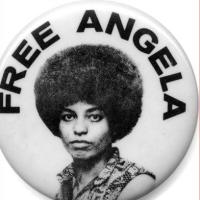
HIST 3590 The Black Radical Tradition in the U.S.
HIST 3590 The Black Radical Tradition in the U.S. (also AMST 3590, ASRC 3590) (HST-AS) (HNA) Tuesday and Thursday: 1:25-2:40 Professor Russell Rickford This course provides a critical historical interrogation of what Black Marxism author Cedric Robinson called “the Black Radical Tradition.” It will introduce students to some of the major currents in the history of black radical thought, action, and organizing, with an emphasis on the United States after World War I. It relies on social, political, and intellectual history to examine the efforts of black people who have sought not merely social reform, but a fundamental restructuring of political, economic, and social relations. We will define and evaluate radicalism in the shifting contexts of liberation struggles. We will explore dissenting visions of social organization and alternative definitions of citizenship, progress, and freedom. We will confront the meaning of the intersection of race, gender, class, and sexuality in social movements.
HIST 4157 Readings in Race and Nineteenth-Century American History
HIST 4157 Readings in Race and Nineteenth-Century American History (also AMST 4157)(HA-AS, HST-AS, SCD-AS) (HNA) Thursday: 12:25-2:20 Professor Tamika Nunley This seminar invites students to consider major debates and historiographical problems that emerge in the history of race in nineteenth-century America. Through in-depth reading, engaging discussion, and scholarly writing we will examine slavery, northern reform movements, gender and power, the American Civil War, Reconstruction and Jim Crow through the prism of race. We will explore tensions that emerge in the craft of history including public debates about the past, analytical vs. narrative history, the problem of archival sources, and what constitutes "good history.
HIST 4723 Scandal, Corruption, and the Making of the British Empire in India
HIST 4723 Scandal, Corruption, and the Making of the British Empire in India (also ASIAN 4465) (HB) (HA-AS, GLC-AS, HST-AS) (EC-SAP) (HTR) Thursday: 2:40-4:35 Professor Robert Travers As the English East India Company conquered vast Indian territories in the late 1700s, it was besieged with allegations of corruption against its leading officials. This course will examine the origins of modern imperialism through the lens of corruption, exploring how corruption scandals became sites for generating new ideas and practices of empire. As well as reading prominent figures of the European enlightenment, including Adam Smith, Edmund Burke, and Denis Diderot, we will also study major Indian writers on corruption, including the historian Ghulam Husain, and the liberal reformer, Ram Mohan Roy. Students will conduct primary research into eighteenth century imperial corruption scandals, and consider the larger question of how modern ideas of political reform grew out of early modern theories of corruption.
HIST 4772 China Imagined: The Historical and Global Origins of the Chinese Nation
HIST 4772 China Imagined: The Historical and Global Origins of the Chinese Nation (also ASIAN 4478, CAPS 4772) (GHB) (HA-AS, GLC-AS, HST-AS) (HAN) Tuesday: 12:25-2:20 Professor Mara Du As China, with its “China Dream,” rises in power on the global stage, what “China” means to its inhabitants and outsiders has become an issue increasingly relevant to business, international relations, and cultural exchange, and a topic that draws intensive attention from historians and social scientists. This course brings together undergraduate and graduate students who are interested in shifting meanings embedded in the concept of “China,” either as part of their research agenda, or as a useful lens for comparative analysis. Focus will be on how China as an Empire/ a Nation was conceptualized by different people in different periods and in different contexts, and on the reality and representation of China as political, cultural, racial, and geographical entities.
Cornell Historical Society Announces: The Inaugural "Making History Accessible Lecture"
As the United States emerged as a world power before the Civil War, the men who led the nation’s triumphant expansion were largely southern slaveholders. As presidents, cabinet officers, and diplomats, slaveholding elites controlled the main levers of foreign policy inside an increasingly powerful American state. Everyone is welcome to discover...
Acclaimed sports historian to speak on 'the NFL’s Most Important Game'
Louis Moore, history professor and co-host of The Black Athlete podcast, will give this semester’s Seymour Lecture in Sports History on Oct. 6.

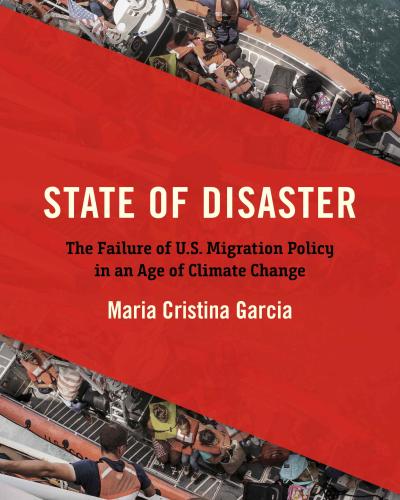
Book: Policymakers are failing ‘climate refugees’
The United States must transform its outdated migration policies to address the human devastation that is left in the wake of climate change and environmental catastrophe, Maria Cristina Garcia argues.
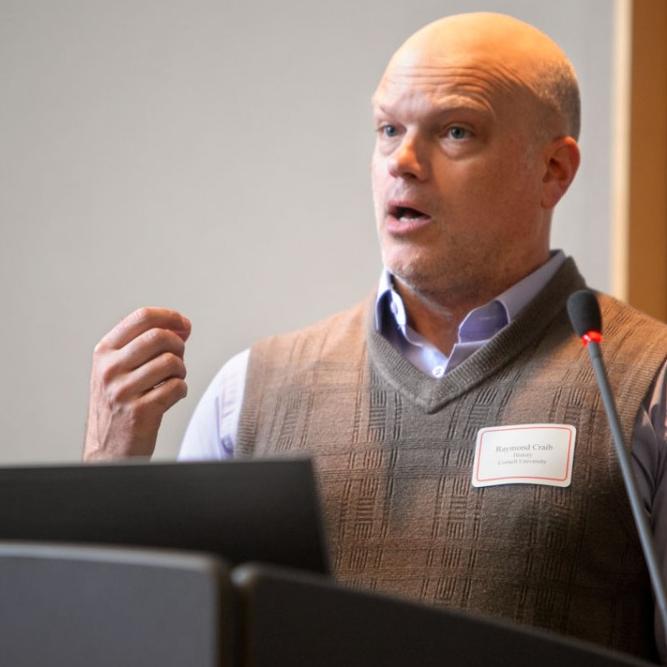
Craib and Fiani win graduate, professional teaching prize
“These professors have demonstrated an extraordinary commitment to teaching and mentoring their students.”
Big Red (and white): 2022 alumni wine collection launches
Now an annual tradition, the program showcases offerings by Cornellian-owned wineries.
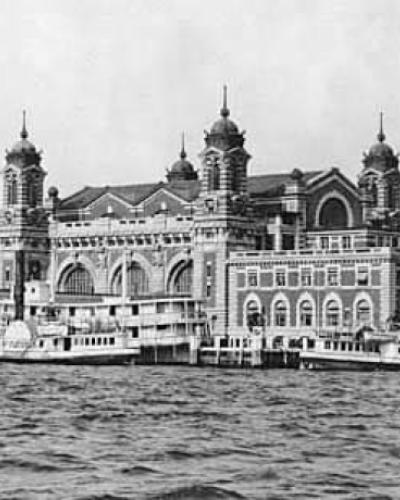
New website offers context on American immigration
The 2016 presidential election and recent presidential actions have brought attention to immigration and immigrants in American society, with much of the debate perpetuating harmful stereotypes, stoking fears about outsiders and echoing a nativist rhetoric that many believed had disappeared from public discourse.In response, Maria Cristina...

“The Janes” director: ‘I think we’re going way backwards.’
Tia Lessin '89 will be on campus Oct. 13 for a screening at Cornell Cinema.

Conference explores the theme of “Repair” from multiple humanities disciplines
Friday’s concluding keynote will be delivered by Jonathan Flatley, a scholar of literature and the relationship between politics and aesthetics .